


When winter hits the Fraser Valley, many homeowners turn their attention inward — not just to the comforts of home, but to its potential. While snow dusts the mountains and the fireplace crackles, winter offers the perfect opportunity to assess how your home is serving you — and how it could do better. If you’re considering a whole-home renovation this year, now is the time to plan for a spring transformation.
Many homeowners in Chilliwack, Abbotsford, and Agassiz use the winter months to lay the groundwork for meaningful change. Whether you’re working with inherited funds or simply finally ready to reimagine your home, winter planning gives you time to make decisions with clarity and confidence.
Why Winter is Prime Time for Renovation Planning
Renovation timelines don’t begin with demolition — they begin with foresight. Spring transformations are the result of months of behind-the-scenes coordination. During winter, homeowners have the opportunity to engage in the foundational planning that sets the tone for success. This includes choosing professionals, exploring design ideas, securing necessary permits, and laying out financial expectations.
Rather than reacting in the spring, winter planning allows you to be proactive and intentional.
Winter Planning Advantage:
Getting ahead of the curve in winter means you can avoid scheduling conflicts, gather inspiration at your own pace, and navigate administrative processes without pressure.
Clarify Your Renovation Goals
Every great renovation begins with a clear purpose. Whether you’re upgrading for lifestyle, value, or aesthetics, start by identifying what you’d like to change and why. Many Fraser Valley homeowners in this stage of life are shifting toward comfort, elegance, and function. Are you hoping to expand the kitchen for family gatherings? Modernize outdated fixtures? Turn underused rooms into hobby spaces or guest quarters?
Reflect on how your home functions — and how it doesn’t. Which rooms feel under-utilized? What causes stress or inefficiency? The answers to these questions form the foundation for meaningful improvements.
Consider how long you intend to stay in your home. A long-term perspective may guide you toward design choices that prioritize comfort, accessibility, and maintenance-friendly materials. You might also think about how your space can support changing routines — such as remote work, aging parents, or grown children moving back home.
Tip:
Take note over one week of the areas you use most in your home and which ones sit idle. These insights help you make the most of your renovation.

Consult with Professionals Early
Winter is one of the most strategic times to connect with experienced renovation teams. Many top contractors begin booking spring projects in January and February. Meeting early ensures you have time to align expectations, establish timelines, and refine your vision without the stress of rushing.
Initial consultations should cover the scope of work, desired outcomes, timeline considerations, and budget targets. It’s also an opportunity to ensure your contractor understands your goals and communicates clearly.
Engaging professionals early also gives you time to revisit plans if needed. Renovation is a partnership — one best built on mutual clarity from the start. During these early discussions, homeowners can also explore layout changes or structural updates that may require additional engineering review or permitting, which takes time to coordinate properly.
Set a Practical and Purposeful Budget
A well-planned budget supports good decision-making and reduces financial stress. Winter allows time to assess your resources, review pricing trends, and identify the features most important to you. It’s not just about setting a number — it’s about understanding the breakdown.
Beyond total cost, your budget should consider the function of each space, the life expectancy of materials, and which updates deliver the most value. Kitchens and bathrooms tend to yield the highest return on investment, while updated layouts improve daily function significantly.
Think about what you use every day and where better design would enhance comfort. For example, investing in better kitchen flow or improving natural lighting in your living spaces can have a noticeable impact on how you feel at home.
Smart Budgeting Strategy:
Prioritize areas that improve daily living, plan for contingency expenses, and leave flexibility for upgrades that will matter most to your lifestyle.
Source Materials Before the Spring Rush
Product delays are one of the most common causes of renovation slowdowns — especially in spring. Winter gives you time to make thoughtful choices on finishes, appliances, flooring, and lighting while ensuring items are in stock or on order.
Discuss with your renovation partner which materials are likely to have longer lead times. Many homeowners are surprised to learn that custom cabinetry, engineered flooring, and designer fixtures can require 6–10 weeks of lead time. Sourcing in winter gives you more control over the project timeline.
You can also take advantage of winter sales or end-of-year inventory clearances to secure quality materials at a better price — a practical benefit for those working with larger budgets or sourcing multiple components.
Avoid Delays:
By choosing and ordering materials now, you ensure that your renovation isn’t halted midway by unavailable products or extended shipping windows.
Prepare Your Home and Schedule for Renovation
Renovations affect not just your space but your routine. Taking the time in winter to plan for how you’ll live during construction reduces disruption. Whether you’re staying on-site or temporarily relocating, consider how the work will impact your household.
Plan for storing items from affected rooms, protecting valuables, and maintaining access to essentials like bathrooms or cooking spaces. Communicate with your contractor about the daily work schedule, cleanup expectations, and site access.
You may also want to plan for how pets or children will be kept safe and comfortable during noisy or dusty renovation phases. Functional prep goes beyond packing — it includes setting up temporary spaces for daily tasks and creating a communication plan with your project team.
Pre-Reno Checklist:
Assess where to store displaced furniture, arrange for protective coverings, and clarify work hours with your contractor to minimize inconvenience.
Don’t Overlook Permits and Regulations
Depending on your municipality, larger renovations may require permits for structural changes, plumbing, or electrical upgrades. Winter gives you time to work through these approvals without compromising your ideal start date.
Permit applications can sometimes take weeks to process, particularly in early spring when volume increases. Starting now ensures your project stays compliant and avoids unnecessary delays.
Consult your renovation team or local building authority to understand what’s needed for your specific plans. This proactive approach reduces the risk of stop-work orders or unexpected costs. If your project includes exterior work, such as decks, additions, or window replacements, additional zoning considerations may apply. Discuss these items early to prevent last-minute complications.
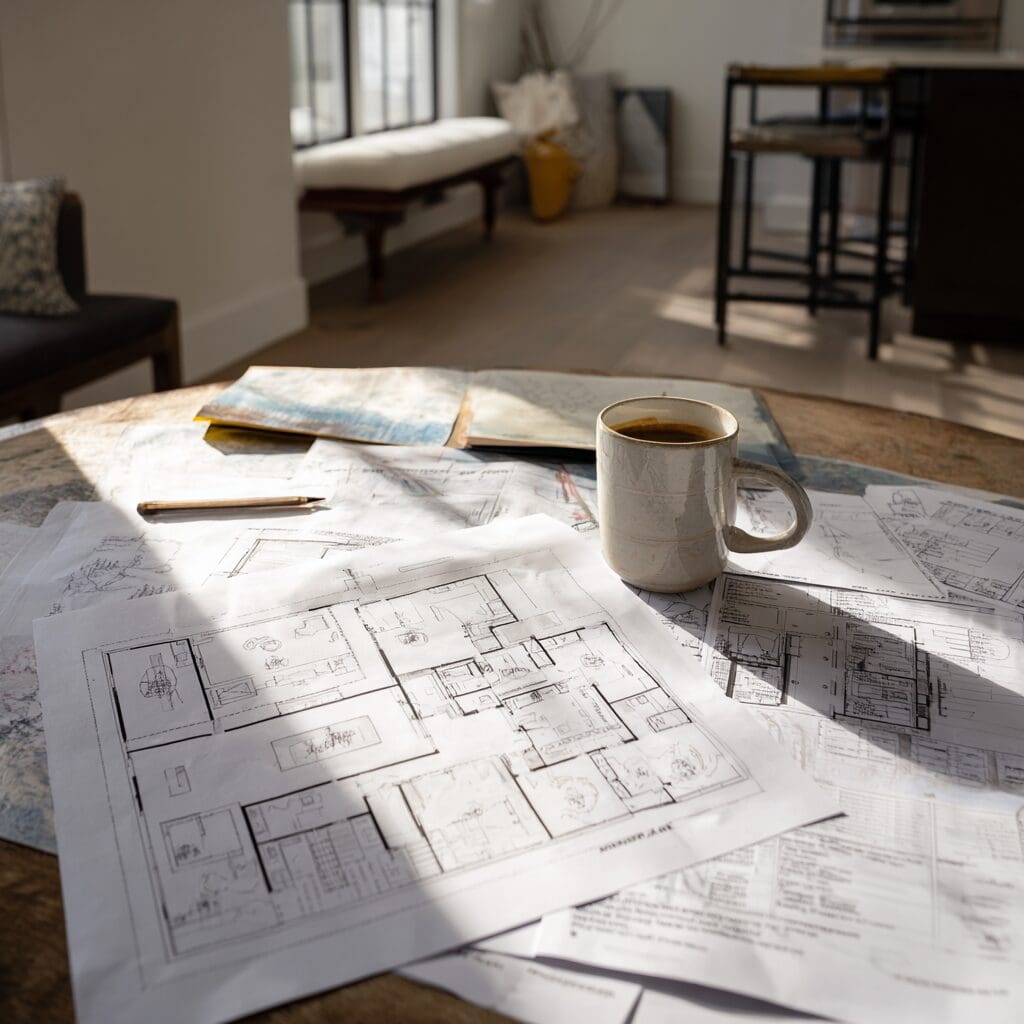
Think Long-Term: Design for Your Future
If you’re planning a whole-home renovation, it’s worth considering how your needs might evolve in the years ahead. Even if accessibility isn’t a priority today, design choices made now can enhance comfort and ease later.
Open floor plans, wider doorways, lever-style door handles, and curbless showers are subtle yet valuable upgrades that can increase safety and livability without compromising style.
Choosing materials that are durable and easy to clean, upgrading insulation, and installing smart home systems are all investments that pay off over time.
You might also consider adding flexible-use spaces — like a guest room that can later serve as a caregiver suite, or a ground-floor room that could become a bedroom — to ensure your home adapts as your lifestyle shifts.
Future-Proofing Tip:
Small decisions now can have a big impact later — design with the next 10 to 15 years in mind.
Emotional Benefits of Planning Ahead
Aside from logistics and timelines, there’s a unique emotional clarity that comes with thoughtful winter planning. By moving through the process step by step, you create a sense of control that makes the project more fulfilling.
Many homeowners use this season to reflect on what they want their home to feel like — not just how it looks. With fewer daily distractions, it becomes easier to make decisions from a place of alignment rather than urgency.
A Season to Plan, A Season to Build
Spring may be the season of action, but winter is the season of clarity. It offers a rare opportunity to think deeply about what your home means to you — and what it could become. The pace of winter invites introspection and allows you to align your renovation goals with your values, routines, and vision for the future. Instead of rushing into decisions under spring deadlines, you can use this time to ask better questions, refine your goals, and anticipate the kind of transformation that brings lasting satisfaction.
When the ground thaws and construction begins, your preparation will pay off. Materials will be ready, your design will be solid, and your renovation team will already understand your priorities. Most importantly, you’ll be equipped with a clear sense of purpose. Whether your renovation is about modernizing your layout, creating space for your passions, or making your home more livable for the years ahead, a season of thoughtful planning will lay the groundwork for a season of seamless building.
FAQ's
Why should I start planning renovations in winter?
Winter allows time for thoughtful design, clear budgeting, contractor availability, and material ordering ahead of the busy spring season.
How far in advance should I book a contractor?
For large-scale renovations, booking three to four months ahead is ideal. That means winter is the time to schedule spring projects.
What types of renovations benefit from winter planning?
Whole-home renovations, kitchen overhauls, and layout changes all require lead time for design, materials, and scheduling.
Can I live in my home during major renovations?
It depends on the scope. Planning early helps you decide what living arrangements make the most sense.
What should I prioritize in a whole-home renovation?
This varies, but many homeowners begin with the kitchen, bathrooms, or primary suite before moving on to other areas.