

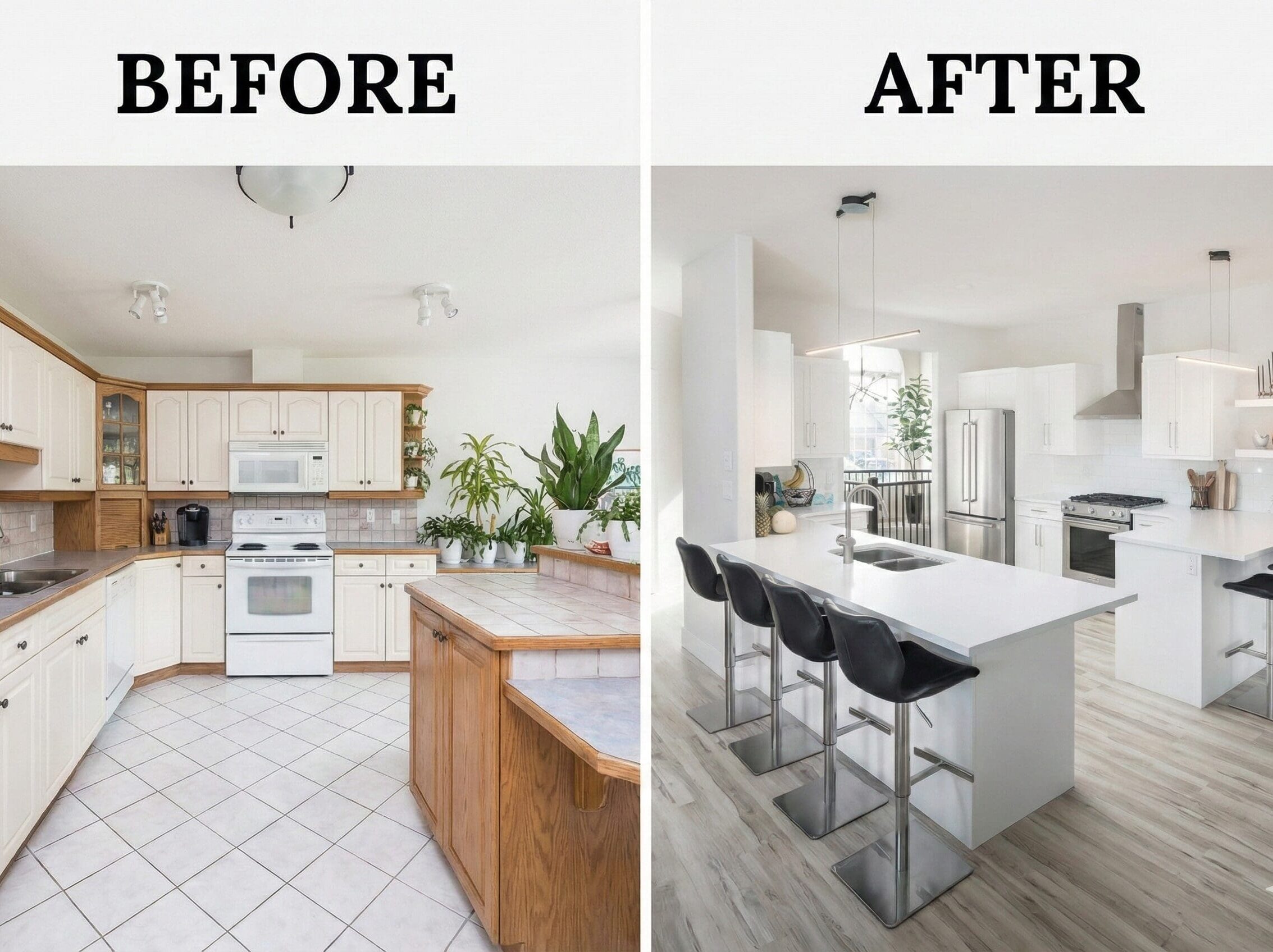
If you’ve just bought a home in Chilliwack and walked into a cramped, outdated kitchen, you’re not alone. Many homes in the Fraser Valley were built with smaller, enclosed kitchens that can feel tight — especially when you’re cooking for a family or entertaining. But good news: You don’t need to knock down walls or commit to a full gut job to dramatically change how your kitchen looks and feels.
This guide shares practical, design-driven techniques to improve how your kitchen functions, looks, and feels — all while preserving your home’s existing layout. Whether you’re a new homeowner or tackling your first renovation project, these ideas can help you work smarter with the space you have.
Quick Win:
Repainting your cabinets in a light colour can make your kitchen feel instantly bigger — without the cost of replacement.
1. Use Cabinet Colour and Finish to Open the Room
One of the most effective visual tricks for making a small kitchen feel larger is to brighten the space using colour and finish. Cabinetry covers the largest surface area in most kitchens, so choosing the right tone can dramatically affect how light interacts with the room. High-gloss or satin finishes in light colours — like warm white, soft cream, or pale grey — bounce natural and artificial light around the room, making the walls seem to recede.
It’s also important to consider the cabinetry hardware. Brushed nickel or matte black handles in simple, streamlined designs help maintain a modern, uncluttered appearance. Updating the finish can make even older cabinet doors feel contemporary.
If you’re not ready to repaint or refinish, try removing upper cabinet doors completely on a few sections to create a more open, shelving-style appearance. Display only a few curated items to avoid overcrowding and visual bulk.
2. Simplify the Visual Clutter
Visual clarity is key in any small space. When your eye can scan the room without being interrupted by competing textures, colours, or ornamentation, the space feels calmer — and larger. In a kitchen, this means being intentional with design choices.
Avoid overly busy backsplash tiles, heavy crown moulding, or contrasting trim colours. Aim for a monochromatic or tone-on-tone look across cabinets, walls, and backsplashes. If you want pattern, opt for subtle, repeating ones that don’t overwhelm the space. Open shelving or glass-front cabinets can help if used sparingly and kept tidy.
If you love open shelving, balance it with closed storage elsewhere to avoid clutter buildup.
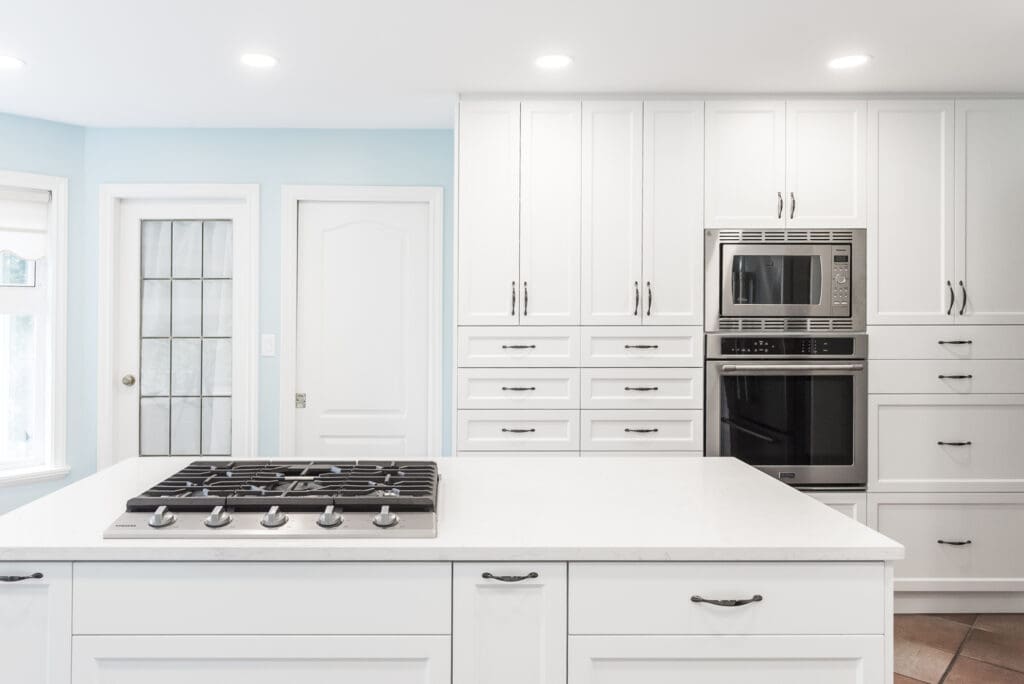
Concealed appliances — or at least choosing finishes that blend with cabinetry — can also reduce visual clutter. Panel-ready dishwashers, integrated range hoods, and neutral-toned microwaves reduce visual breaks.
3. Upgrade the Lighting (Seriously — All of It)
Lighting is often overlooked in smaller kitchens, yet it’s one of the most cost-effective ways to change the perception of size. Rather than relying on a single ceiling fixture, aim to layer three types of lighting: ambient (general), task (focused), and accent (decorative).
Ambient lighting might include flush-mount LED ceiling lights or slim-profile track lighting. Task lighting — such as under-cabinet LED strips or puck lights — should illuminate work surfaces like counters and stovetops. Accent lighting can highlight open shelves or glass cabinets, adding depth and dimension.
Bright Idea:
Layering light helps eliminate shadows that make corners feel cramped.
Where possible, increase natural light exposure by keeping window coverings minimal. A frosted window film, for example, can provide privacy without blocking daylight.
4. Maximize Storage with Smart Interior Upgrades
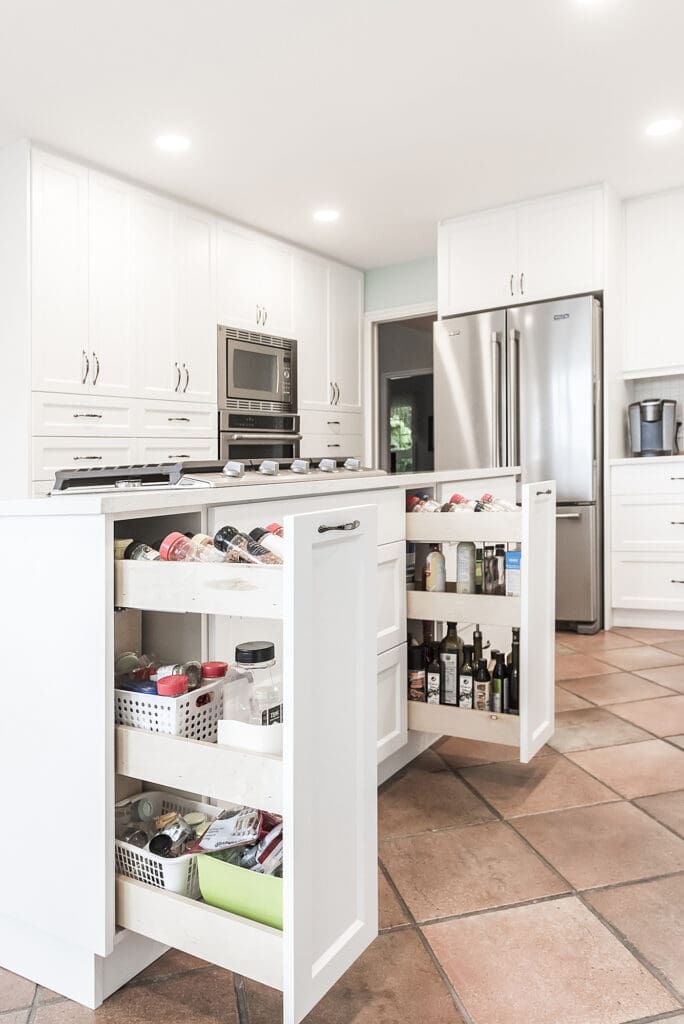
Small kitchens often suffer not from a lack of cabinets, but from poorly utilized interiors. Reworking how the inside of each cabinet functions can reclaim significant storage space and reduce countertop clutter.
Installing roll-out trays in base cabinets makes it easier to access items at the back — and allows for better organization. Tiered organizers for spices, cutlery dividers, and vertical dividers for baking sheets or trays all make better use of deep or narrow spaces. Using the inside of cabinet doors for slim racks or hooks can also add extra storage.
Look upward too: high ceilings often mean there’s vertical space above upper cabinets. Adding extra shelving or enclosed bins above cabinetry can provide seasonal or less-frequently accessed storage without encroaching on everyday functionality.
5. Choose Visual Continuity for Flooring and Walls
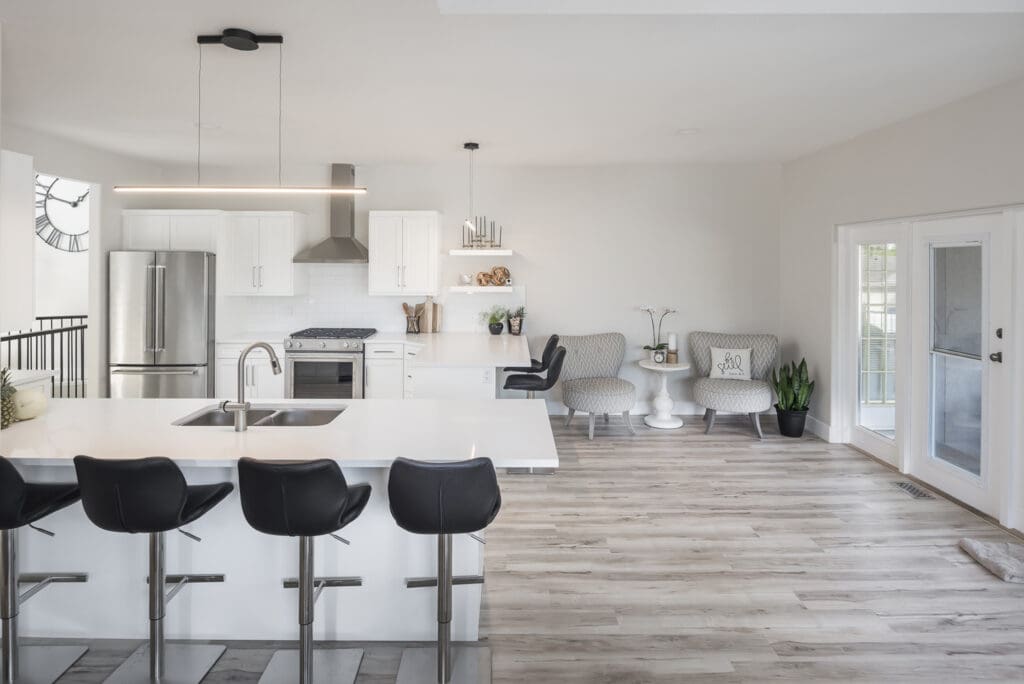
Flooring that extends seamlessly through the kitchen and into adjacent rooms removes the visual “boundaries” that make a kitchen feel closed in. The fewer material or colour transitions your eye sees, the more expansive a space appears.
Select flooring materials in light, natural tones. Wide plank flooring, whether laminate, engineered wood, or vinyl, reduces the number of seams and elongates the floor. Avoid high-contrast grout lines or tile patterns that chop up the space.
Walls and ceilings should remain in a consistent, neutral tone throughout the space. This consistency unifies the surfaces and makes transitions from one area to another feel smooth.
Flooring Rule of Thumb:
The fewer the seams or pattern interruptions, the larger your floor will look.
Additional Tips: Mirrors, Glass, and Layout Tactics
There are a few more subtle design tricks worth noting. While mirrors aren’t often used in kitchens, a small mirror backsplash behind a stove or along a short wall can add depth and reflect light.
Choosing glass cabinet doors (in moderation) introduces visual depth without removing storage entirely. Transparent or frosted options give the impression of openness while still concealing everyday items.
When it comes to layout, keeping sight lines clear is essential. Avoid tall, bulky furniture or standalone pantries near entries or walkways. A slim rolling cart can provide additional storage or prep space without creating obstruction.
If your kitchen has a peninsula or island, consider open shelving or waterfall edges to reduce visual heaviness.
Planning Ahead: Functionality vs. Aesthetics
When deciding how to improve a small kitchen, it’s important to balance visual appeal with function. Ask yourself:
- Do I need more prep space or more storage?
- Where do I spend most of my time in the kitchen?
- What items do I use daily that deserve better placement?
Form should follow function — a space that looks great but doesn’t support your daily habits won’t truly feel bigger. Efficient layout, proper lighting, and logical storage all contribute to the experience of a kitchen that works as well as it looks.
Conclusion: Smart Design Makes the Difference
Expanding the feel of a small kitchen isn’t about chasing square footage — it’s about making intentional, well-informed design decisions. By focusing on lighter finishes, simplifying visual clutter, layering effective lighting, and using every inch of space efficiently, you can dramatically shift how your kitchen feels on a daily basis.
These strategies are especially helpful for new homeowners in Chilliwack and similar Fraser Valley communities, where modest kitchen footprints are common. Whether you’re tackling upgrades all at once or slowly over time, each change brings you closer to a kitchen that feels less like a constraint and more like a welcoming, well-used hub of the home.
FAQs
Can you paint cabinets without replacing them?
Yes — cabinet repainting is a budget-friendly way to refresh your kitchen. Proper surface prep is essential for long-lasting results.
How much does a small kitchen update cost in Chilliwack?
Surface-level renovations such as painting, lighting updates, and cabinet hardware changes typically range from $5,000 to $12,000, depending on material and labour choices.
What colour makes a small kitchen feel bigger?
Soft whites, warm neutrals, and pale greys reflect light and make the space feel open and airy.
How long does it take to complete a non-structural kitchen upgrade?
Most cosmetic updates can be completed within 2–3 weeks, depending on scope and scheduling.
What flooring works best in a small kitchen?
Luxury vinyl plank or laminate in wide, light-toned planks offer durability and help stretch the perceived size of the room.